

Adam Wei, University of British Columbia
March 29, 2026
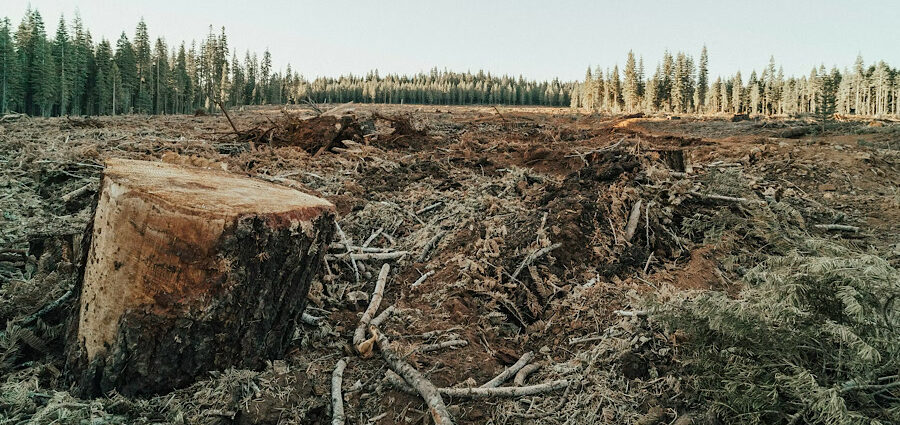
It’s a well-established fact that forests and water are deeply connected. For decades, paired-watershed experiments — a scientific method for evaluating land-use impacts on water quantity or quality — have shown that when we lose forests, the total amount of water flowing through our rivers tends to rise.
But a critical question has remained unanswered: does this extra water come from previous reserves, or is it simply “new” rain that the land is failing to hold?
In other words, is forest loss causing our watersheds to lose their internal integrity and leak like a sifter?
Our recent study at the University of British Columbia analyzed 657 watersheds across the globe. By using a tool called the Young Water Fraction, we found that forest loss significantly accelerates how fast precipitation travels through a landscape.
We estimate that for every one per cent of forest lost, the “young water” in our streams increases by about 0.17 per cent.
Crucially, our research reveals that it isn’t just about how many trees are cut down — it is also about the spatial patterns left behind. The way we arrange forest patches can either aggravate or mitigate this leakage.
Why watersheds are leaking
Young Water Fraction tells us what proportion of a stream is made up of rain that fell recently — typically within the last two to three months. Ideally, we want a low percentage of young water.
A low amount means the landscape is acting like a sponge, filtering rain through the soil and into groundwater, which sustains the river during dry seasons. A high amount of young water, however, suggests a “leaky” watershed that sheds new rain almost immediately.


The reasons for this leakage are tied to how we treat the land. When a forest canopy is removed, raindrops hit the ground with full force instead of being intercepted by leaves. Furthermore, heavy machinery and logging roads pack the soil tight, making it harder for water to sink in.
Lastly, without trees to breathe water back into the atmosphere through transpiration, the soil stays saturated. When the next rain comes, there is no room left to store it, forcing the water to run off quickly into the stream.
This loss of retention capacity is especially potent in watersheds with shallow groundwater. In these areas, the soil layers are thin, limiting how much rain can be stored. Any disturbance to the land cover lacks a buffer, immediately translating into altered, younger streamflow.
Forest edges
The most striking finding of our work is that the landscape pattern — the spatial configuration of the trees — matters just as much as the total area lost.
Imagine two scenarios: one large, solid block of harvested timber versus many small, scattered patches. Our work confirmed that even if the total area cut is the same, the hydrological impact is different.
We looked specifically at forest edges, the boundary where trees meet open clearings. Interestingly, as the density of these edges increases, the amount of young water tends to decrease.
This happens because these edges are more exposed to sunlight and wind. These “edge effects” can enhance the process of evapotranspiration, driving more soil water to leave the watershed as vapour rather than becoming quick runoff.
This regulative impact is especially powerful in sparsely forested watersheds with less than 40 per cent forest cover. This is because boosting evaporation requires openings large enough to allow sunlight to penetrate from the side and drive microclimatic changes.
In densely forested areas, increasing edge density fragments the remaining open space too much, resulting in smaller gaps that actually attenuate these edge effects.
Rethinking forest management
Our research reinforces the critical role of forests in water management. Beyond the obvious connection between forests and water, we now know more about how forest loss compromises a watershed’s hydrological integrity. The connection between our forests and our water is even closer than we previously expected.
This research also challenges the idea of binary forest management that focuses on either keeping or losing trees. This is particularly vital for regions where the timber industry is integral to the economy.
The direct lesson for the industry is that we should avoid uniform, regularly shaped clearcuts, which result in low edge density. Instead, we advocate for replicating the complex, irregular patterns found in nature. This can be achieved through silvicultural techniques such as variable retention harvesting, selective logging and continuous cover forestry.
Taking into account a forest’s landscape pattern provides a way to balance forest conservation with development: by optimizing how forests are managed, it’s possible to mitigate the negative hydrological impacts caused by logging.
By designing with the landscape in mind, we can help ensure our watersheds continue to function as sponges rather than sifters.

Adam Wei, Professor, Department of Earth, Environmental and Geographic Sciences, University of British Columbia
Subscribe to our newsletter.
This article is republished from The Conversation under a Creative Commons license. Read the original article.
