

Jen Kostuchuk, University of Victoria and Anelyse Weiler, University of Victoria
October 26, 2026
Is masculinity a barrier to green jobs?
From male voicemaxxing to politicians being graded on their jawlines, men and boys face a dizzying array of cultural messages about how to be a man today.
Affordability pressures and employment uncertainty are challenging old-school assumptions that men should be primary providers. But in the midst of cultural shifts and economic instability, some men have gravitated toward a nostalgic version of masculinity.
Jobs in coal, oil and gas powerfully symbolize the ideal of a tough, rugged “frontier masculinity” that involves conquering the natural world.
Because this version of manhood rejects environmentalism as weak and unmanly, social scientists have wondered whether masculinity is a barrier to protecting biodiversity, reducing our meat consumption and transitioning away from polluting fossil fuels.
Researchers remind us, however, that our ideas about gender can adapt to new challenges facing our species — like the existential threat of climate change.
Do green jobs require environmentalism?
Definitions of “green” or “sustainable” jobs tend to be aspirational. There’s an assumption that this type of work is reserved for those with strong personal environmental values, like conservationists or ecologists.
Some also assume that workers in male-dominated industries like the oil and gas sector don’t care about the environment. If you work in resource extraction and drive a Ford F-150, environmentalists will probably believe you won’t be interested in signing their petition against coal mining.
But if governments and environmental movements are serious about shifting away from highly polluting industries and creating green jobs, they must find ways to appeal to workers who don’t identify as passionate environmentalists. It’s also important to consider the experiences of those working in existing green jobs.
Tradespeople, a unique group within a traditionally male-dominated sector, deserve to be centred in these conversations.
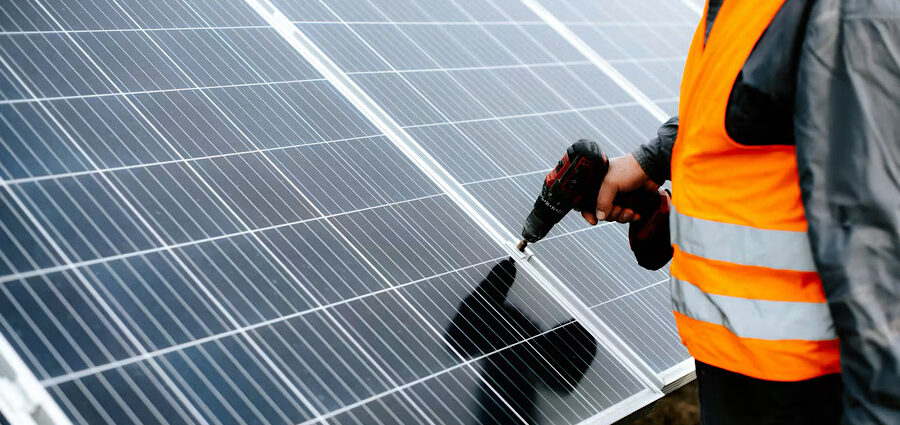
That’s why we focused our most recent research on working conditions and overall job satisfaction among 50 tradespeople in the heat pump and solar panel sector across British Columbia. Most of them were men to best reflect the gender makeup of the industry. These workers play an instrumental role in the energy transition and in improving people’s material quality of life through thermal comfort.
For our project, we were guided by a simple question: Are green jobs good jobs?
We wanted to understand why tradespeople entered and stayed in these sectors. Does this line of work meet their everyday needs? If men, how do they express masculinity while working with green technology?
Most electricians and HVAC technicians in our study weren’t motivated to work with green technologies because of a deep concern about the fate of the planet. Many were just following the natural progression of demand for these products in their field.
They expressed longstanding blue-collar values like hands-on problem solving, and some were excited about exploring a novel technology that happened to be green. They were driven by a range of economic, social and personal benefits. Eco-friendliness was a welcome, if incidental, bonus.
What are the benefits of this work?
When we asked workers why they chose a career in the trades, they responded with things like: “I did it for the money.” The economic motivators were clear.
In B.C. and many other jurisdictions, college trades programs offer an appealing route for people interested in a paid apprenticeship and a practical pathway to employment. One worker told us, “you become very employable” after school.
Today, this is especially true. Tradespeople are in high demand because of the call for green technology. Some workers outlined a sense of job security, even calling their work “AI-proof” and “recession-proof.”
Beyond the economic benefits, participants described the personal benefits of green trades work, including positive family influence. For example, an electrician who installs solar panels reflected:
“I went out to the oil industry in Alberta for a little bit, and then unfortunately I got hurt, and I was rethinking a bunch of things… but ever since I had kids, balance has been the biggest thing. A balance and [positive] legacy too.”
Being of service to others in the community and seeing the fruits of their labour were also important.
“I always like [residential solar projects] that are close to home. I like the ones where I go out for a walk after dinner with my wife and I can point out every project…It’s a really good feeling being part of your community when you’ve done certain work around the area…it’s fantastic at the end of the day to stand back and see the amount of power you’re producing.”
Navigating the ‘solarcoaster’
Why should the average oilsands or LNG worker leave their well-paid job if there is no compelling counter-offer?
Green trades aren’t perfect. In our interviews, electricians talked about the stresses of the “solarcoaster,” which describes the ups-and-downs of clean energy rebates offered by various governments. Most of these rebates are inconsistent and temporary. As one worker explained: “They’re always changing…it’s onerous on me as a small business.”
Many of the tradespeople we interviewed wanted consistency from governments, rather than the unpredictability of an energy source that has been subject to culture wars.
Despite these challenges, green tradespeople were overwhelmingly positive about their jobs. Most workers were also satisfied with their wages. Seth, a solar panel installer who described his pay as “very generous compared to our competitor,” went so far as to state: “Even if I won the lottery, I’d still work in solar.”
Like others we spoke to, Seth was drawn to a green trade because, compared to his previous non-green job in the Alberta oilsands, it offered job security and work-life balance.
Shifting culture of masculinity
Old-school masculinity provides a cultural script in which blue-collar workers should disregard health and safety in favour of toughness, practise rugged individualism and eschew emotion.
But the blue-collar, green tradesmen we spoke to — working in what we call “teal-collar jobs” — appear to be embracing a shifting culture of masculinity.
Having witnessed previous generations of tradespeople disabled by workplace injury, they respect health and safety. This work also allows them to be emotionally and physically present for their family. Callum, a father who left the automotive industry, explained:
“Now I have control over my calendar…I was able to go to every single field trip that my kids had. I went to every sporting event. I went to everything. I didn’t miss a beat.”
Jen Kostuchuk, PhD Candidate, Sociology, University of Victoria and Anelyse Weiler, Associate Professor, Sociology, University of Victoria
This article is republished from The Conversation under a Creative Commons license. Read the original article.
