

By Noah Korver, Local Journalism Initiative Reporter, Yukon News
July 19, 2026
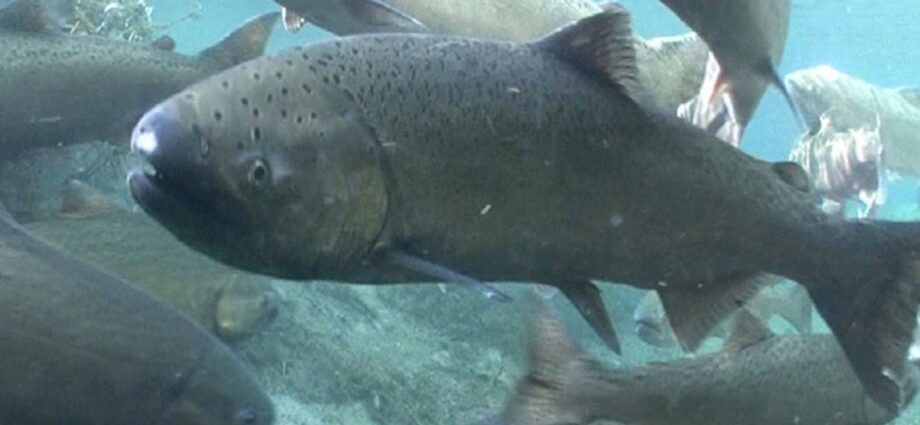
There is reason to be hopeful, says the Yukon Salmon Sub-Committee, in light of a new study published by Alaska researchers that sheds more light on the mystery of shrinking chinook Salmon returns on the Yukon River.
Co-authored by researchers from the University of Alaska Fairbanks and the U.S. National Oceanic Atmospheric Administration (NOAA) the study identifies significant and prolonged marine heatwaves in the Bering Sea as a contributing factor to the massive drop in the number of Salmon migrating up the Yukon River to return to spawning beds in the Yukon.
A marine heatwave is defined a period of increased ocean water temperatures that meet or exceed the upper limits of the historical average for a period of five or more days in a row.
Curry Cunningham is an associate professor of fisheries with the University of Alaska Fairbanks College of Fisheries and Ocean Sciences and was one of the lead researchers on the NOAA led study.
Cunningham says his team identified several significant and prolonged heatwave events between 2016 and 2020.
“So if you just look at sort of the sea surface temperature pattern, it really started increasing kind of [around] 2014 or 2015, but we weren’t really in a sort of marine heat wave until 2016 and that lasted from 2016 really up to about 2020.”
According to Cunningham, the new study identified a variety of pressure points resultant from these heatwave events that are likely contributing to the historically low numbers of returning chinook Salmon.
“From a marine heatwave perspective, it has had impacts on forage species that king Salmon are consuming in the marine environment. So when we think about kind of herring and capelin and some of these other species that are energetically important as part of the diet,” Cunningham said, using the American term for what Canadians call chinook Salmon.
“We also saw a reduction in the quality of some prey items. Juvenile pollock [which] are these somewhat ubiquitous small fish that are out [in the sea] that king Salmon are eating. The actual energy density, or like how fatty those juvenile pollock are, that sort of quality went down in this marine heat wave year as well,” Cunningham said.

He said this marked reduction in the availability and quality of food sources for Salmon is one of the team’s leading hypotheses to explain the massive drop in Salmon returns observed on the Yukon River in recent years.
However, he pointed out that warming ocean waters aren’t the only challenge chinook Salmon face, explaining that Canadian origin fish are especially sensitive to environmental changes given the mind boggling distances they have to travel during their summer migration to their ancestral streams.
“It’s basically the equivalent of running a marathon every day for a month,” Cunningham said.
“They’re going 2,000 miles upriver, and increasingly what we’re learning is that lower sections of the Yukon River are actually getting quite warm in these warm years as well.”
While most people may think of the Yukon River as a cold water river, Cunningham said that in recent years some lower sections of the river have become increasingly warm compared to historical averages. For the cold adapted Chinook Salmon, a temperature shift of just a few degrees can represent a huge challenge as the fish are forced to burn extra energy.
Dennis Zimmerman is the Chair of the Yukon Salmon Sub-Committee (YSSC), an organization formed from the Yukon Umbrella Agreement between the Yukon, Canadian governments and the Yukon Council of First Nations.
The YSSC is the chief voice for Salmon management and conservation in the Yukon and works closely with contemporaries in Alaska to create cohesive Salmon management policies on both sides of the border.
Zimmerman said that in addition to staying informed of any new findings published by partner organizations in both jurisdictions, the YSSC has also conducted a great deal of it’s own research to try and understand the reasons behind the recent collapse of Canadian origin Chinook Salmon stocks.
“Part of that research was identifying sort of all the stressors, [affecting Salmon] and you know there’s over 100 of them we identified,” Zimmerman said.
Zimmerman said that Canadian researchers identified increased heat in the Yukon River as a chief concern among those stressors.
“We’ve done a lot of work and supported a lot of research and heard a lot of research around heat stress in river, [leading to] in river mortality as they’re migrating,” Zimmerman said.
While this may seem like all bad news for the Chinook, Zimmerman has a slightly sunnier outlook, highlighting how a better overall picture of the challenges faced by Chinook Salmon can aid fisheries managers in making more informed conservation decisions.
“Up until only a few years ago, they never they never basically factored in the on route mortality due to heat stress,” Zimmerman said, explaining how in recent years scientists where unable to explain the causes behind massive numbers of Chinook Salmon disappearing between the mouth of the Yukon river in Alaska and the international border.
The effect isn’t negligible either. According to Zimmerman, this year’s Chinook Salmon run has already exceeded the expected number of returning fish. “So you know have preseason projections, and we seem to be on the upper end of that, and that’s really positive,” he said.
Going forward, Zimmerman says the YSSC will continue to advocate for Salmon while focusing on helping Salmon with the tools under its control such as preserving critical spawning habitat and continuing to work with colleagues across the border to better understand and manage these incredible fish.
Subscribe to our newsletter.
Contact Noah Korver at noah.korver@yukon-news.com

