

Samadhee Kaluarachchi, University of British Columbia and Younes Alila, University of British Columbia
April 8, 2026
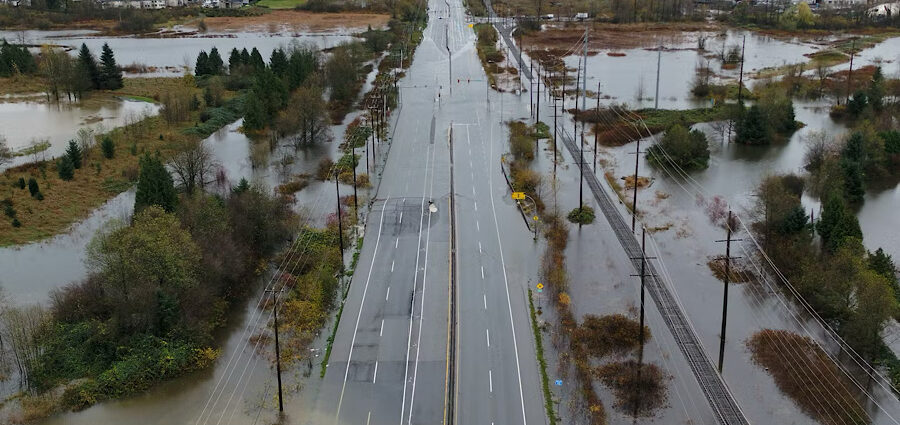
As large floods occur more frequently worldwide, many wonder what led to such devastating events. Greenhouse gas emissions from human activities, improper land management and forest removal increase flood frequencies and severity.
Increasingly destructive floods also re-ignite debate on how we can make communities more resilient. Should we rely solely on traditional infrastructure like dikes and dams? In many regions, traditional infrastructure is aging and becoming increasingly insufficient, especially due to climate change.
As a result, some governments are adopting solutions that incorporate or mimic nature. However, while many jurisdictions have expressed interest in nature-based solutions, most have yet to implement them on appreciable scales. Funding is limited and little is known about the effectiveness of nature-based approaches.
The idea that forests help reduce flood risk might seem a given to most people, but scientists who study this (forest hydrologists) remain divided.
Scientific and governmental reports have found that forests prevent small and moderate floods but have little impact on large floods.
Our recent paper challenges this conclusion. It comes from studies that don’t correctly reveal how changing forest cover causes changes in flood frequencies and sizes, leading them to underestimate what forests can do. Our methods that can causally link changes in forest cover to floods suggest that forests can mitigate floods of all sizes.
Flood risk
Floods occur when factors like rainfall, landscape wetness, snowpack and snowmelt combine. These factors vary randomly through time and over the landscape. Today, flood risk is escalating, and the stakes are high in many regions.
A flood event of a certain size and frequency can be generated by an infinite number of combinations of the same factors. Understanding the causes of rising risk means considering all possible flood-generating combinations.
Large floods happen naturally, but adding or removing forests can change their size and frequency. It’s important to consider how changing forest cover alters both factors. The dominant approach doesn’t do this; it only looks at how flood sizes change.

Forest hydrologists, engineers, policymakers, conservationists and industry leaders have long debated the extent to which we should rely on forests to mitigate floods. These debates often reflected competing interests, which in turn influenced policy.
The dominant method underestimates just how strongly even large floods react, giving the impression that degrading forests won’t influence large floods. In reality, floods could be happening much more frequently if not for forests.
Relying on that method can put communities in even more danger when losses of lives and livelihoods, economic damages and lawsuits are already piling up from improper land management and climate change.
It also makes us undervalue nature and miss out on novel opportunities to incorporate nature’s ability to mitigate floods. Our flood management therefore must be guided by strong science.

Healthy forests are integral to flood management
Our study examined the core research questions and methods of both the dominant approach and a less dominant approach to determine which one reveals how changes in forest cover cause changes in flood risk. We stepped back to look at how flood risk is assessed more widely beyond forest influences, and how related disciplines like climate science answer similar questions.
Our study challenges the validity of the dominant non-causal method. Instead, our synthesis advocates for the less dominant causal method, which is in fact standard outside the field of forest hydrology.
The less dominant approach considers how the frequency and size of floods change when we add or remove forests. Accounting for all possible flood-generating combinations can reveal how changes in forest cover cause changes in large floods.
Although less dominant in the field, these studies exist, suggesting that floods of all sizes can be sensitive to changes in forest cover.
Forests return moisture back into the atmosphere, promote infiltration and, in snow environments, promote smaller snowpacks that melt slower. Consequently, forests can reduce the probability of even large floods, making them smaller and much rarer.
When we degrade forests, large floods can react strongly. Their frequency, in particular, can increase dramatically with larger shifts possible for larger floods.
These probability-based approaches are standard throughout science, including in flood-risk analysis and to understand how climate change influences weather extremes.
It’s time for forest hydrology to follow suit. We can no longer afford to justify non-causal work that greatly underestimates risk.
Incorporating strong science means recognizing that forests can reduce the risks of even large floods, making them much less common.

In regions where causal studies are limited, reports should acknowledge this difference among causal and non-causal studies elsewhere and encourage rigorous science.
Planning and management must consider both climatic and landscape drivers. Degraded landscapes, even in uplands thousands of kilometres away, can cause floods downstream. Governments must manage the land carefully, collaborating across jurisdictions to ease downstream risk.
There is concern that nature-based approaches can’t mitigate large floods, especially in forest-based initiatives. Our research, however, indicates that forests and other nature-based initiatives can address flooding and complement traditional infrastructure while providing a range of social and ecological benefits.
By adopting and promoting causal science, we can overcome key barriers for implementation and build a strong case for wider adoption of forests as an integral part of nature-based flood management.
Samadhee Kaluarachchi, PhD Student in Forest Hydrology, University of British Columbia and Younes Alila, Professor, Department of Forest Resources Management, University of British Columbia
Subscribe to our newsletter.
This article is republished from The Conversation under a Creative Commons license. Read the original article.
