

By Marcus Bankuti, Local Journalism Initiative Reporter, The Eastern Door
January 16, 2026
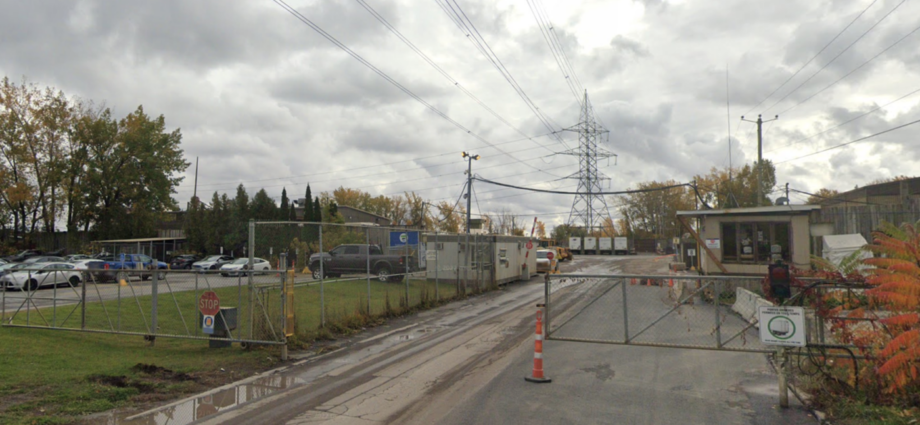
The Mohawk Council of Kahnawake (MCK) was not alerted after the federal government laid charges against recycling company Terrapure and the city of Ste. Catherine, despite the alleged environmental infractions taking place within the bounds of the Seigneury of Sault St. Louis land grievance.
“At the end of the day, for us, it’s in the Seigneury,” said MCK grand chief Cody Diabo. “We should be in these discussions.”
On October 29, Terrapure, which recycles batteries and plastics, was handed 52 charges for alleged violations of the Fisheries Act at its nearby facility. The city of Ste. Catherine, meanwhile, received 38 charges for allegedly permitting the activities. In November, both parties pleaded not guilty. Three individuals are also being charged.
Diabo said he only became aware of the case after reports surfaced in the media late last week outlining the charges. He has since been in touch with the company – Terrapure reached out – and a follow-up meeting has been agreed upon. The MCK is also contacting representatives of all levels of government involved.
“We’re going to be talking with the feds saying ‘how come you guys aren’t communicating?’” said Diabo. “They should be made aware of anything that’s happening in the Seigneury, and they have to bring it to our attention.”
The charges stem from allegations from Environment and Climate Change Canada that toxic water was discharged into the St. Lawrence Seaway from 2020-2023. The facility’s permit was renewed by the province last year.
The Terrapure facility was previously associated with complaints from Kahnawa’kehró:non relating to air quality concerns, with some residents blaming a new addition for plastics recycling for an odour in their neighbourhood.
The Ste. Catherine industrial park, where Terrapure’s facility has been located since 1984, has long been a concern for Kahnawake, according to Kahnawake Environment Protection Officer (KEPO) director Patrick Ragaz.
“To find out now there’s also water discharge issues, it’s very concerning for us, and we are investigating further,” Ragaz said.
“I don’t want to speculate too much on specific concerns. We know there’s very high levels of sulphate and also some lead that had been discharged at different times from that facility.”

He pointed out that Kahnawake Survival School moved from its old location near the industrial park because of contamination in the soil. The school opened at its current location in 2008.
While he said there should have been no impact to Kahnawake’s drinking water from the allegations of discharge of harmful substances, since the water intake is further upriver and it is rigorously tested, he is concerned fish populations could have been affected.
“One potential impact could be on fish, if it’s maybe killing fish directly because of the concentrations or potentially accumulating in fish. We don’t know if that’s the case at this point, but it’s something we want to look into more,” he said.
KEPO has representatives on the MCK consultation committee to help review initiatives that might impact the rights and interests of Kahnawa’kehró:non on traditional territory, he said. Soon, KEPO will undertake a regional assessment of the St. Lawrence River in hopes of getting beyond the limitations of evaluating specific projects.
As for the potential contamination, Ragaz said KEPO has good working relationships with representatives of federal and provincial ministries, but the local environment office was nevertheless caught off guard by the news of these allegations.
“It’s disappointing we weren’t informed about this,” he said. “I think that’s fair to say.”
The company’s general manager, Denis Beaulieu, defended the company’s practices in a statement to The Eastern Door.
“Operating in compliance with law is, and has been, Terrapure’s priority,” said Beaulieu. “Terrapure has a valid operating permit from the Quebec environmental regulator, which was renewed in 2025. Terrapure’s effluent also complies with the applicable discharge criteria. Out of deference to the judicial process, we cannot comment further at this time.”
Community member Konwatsitsawi Meloche had choice words for Terrapure.
“Their name is quite the oxymoron,” she said, noting that the word “terra” refers to the planet. “They certainly weren’t purifying the Earth.”
Meloche, who was a French teacher at the old KSS location in the 1980s and 90s, remembers the Ste. Catherine industrial park as a thorn in the school’s side in those decades. She said she is frustrated about a pattern of putting industrial plants near Indigenous communities, despite the potential for contamination.
“This news made me feel like stakeholders and shareholders are always much more important than people, especially Indigenous peoples,” she said, although she pointed out it’s not just Kahnawake that is affected if contaminants are discharged into the Seaway.
She believes not only the company but the governments that permitted any alleged infractions should face litigation.
“They’re on ancestral Mohawk lands, on the edge of an Indian reserve, so if their own city and their own Quebec government didn’t push them to step up towards changing and cleaning up and actually make the Earth pure to some degree, then why should they care?”
The city of Ste. Catherine declined to comment, besides confirming the legal proceedings and citing the need not to prejudice them.
Diabo said the community will be given a chance to weigh in on this issue at a community meeting and that he expects this issue to be treated with the same seriousness as the Chateauguay fuel spill, which resulted in the MCK suing Chateauguay.
He was previously in touch with Terrapure over the allegations that its plastics recycling plant was responsible for air quality issues.

“We know the community is pushing back really hard against this incident on top of the incident that happened before with the odour,” he said, adding that the community is particularly on alert since the Chateauguay fuel spill.
“I remember at that time people were very concerned with all the industrial buildings around. It’s something we’re definitely taking very seriously.”
Quebec’s environment ministry confirmed that the company’s permit was renewed and amended in 2025, which is done every five years. “The amendment includes standards for the discharge of treated wastewater. These standards were determined taking into account the sensitivity of the receiving environment and are safe for the environment,” said spokesperson Ghizlane Behdaoui in a statement to The Eastern Door.
“The Ministry is monitoring the file and will ensure compliance with the conditions of the ministerial authorization, in accordance with the provisions of applicable environmental legislation.”
Environment and Climate Change Canada, the department responsible for the investigation that led to these charges, did not provide a response in time for The Eastern Door’s deadline as to why Kahnawake had not been alerted to this matter.
The majority of the charges are for the alleged discharge of harmful substances. The Fisheries Act indicates that entities such as Terrapure or Ste. Catherine face penalties of at least $100,000 per summary convinction, but as much as millions of dollars.
Subscribe to our newsletter.
marcus@easterndoor.com
Marcus Bankuti, Local Journalism Initiative Reporter
