

Mark Ireland, Newcastle University
March 4, 2026
The Middle East plays a central role in global energy and therefore global markets. As tensions escalate and the strait of Hormuz, a key trade route, faces disruption, headlines assessing the wider impact of the Iranian conflict often centre on oil and gas supply.
There’s one underlying reason that so many oil tankers and liquefied natural gas (LNG) cargoes pass through the strait, and that Middle East conflict shakes global energy markets. That reason is a geological one: an extraordinary concentration of oil and gas accumulations.
As the deadly Ukraine conflict showed in 2022, a predominance of supply from one region can, justifiably, ignite concerns over supply disruption. So much of the world’s oil and gas supply is clustered in one region. This helps explain today’s volatility.
The Middle East is responsible for some 30% of global oil production and 17% of global natural gas production. The revenues from this vast scale of production underpin the economies of many Middle Eastern countries and provides important energy supplies around the world. Incredibly all this oil and gas is found within a single minor tectonic plate – the Arabian plate.
This plate covers more than 1 million square miles and hosts 55% of the world’s proven oil reserves and 40% of the natural gas. The region also hosts a disproportionate number of giant and supergiant fields. Giant oil and gas fields are those with more than 500 millions of barrels of oil equivalent; supergiant are those with more than 5 billion barrels of oil equivalent.
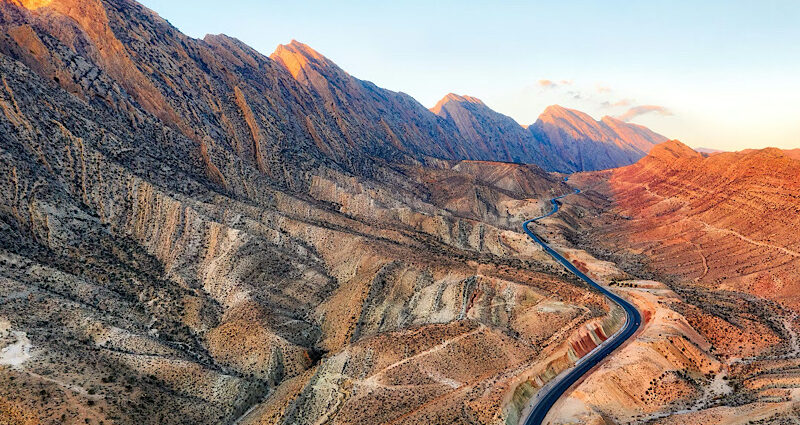
The Arabian plate is bounded by the Red Sea, the Zagros mountains, the Indian Ocean and the Mediterranean. The Arabian plate separated from the African plate about 25 million years ago. As the Arabian plate shifted northwards, it collided with the Eurasian plate. This resulted in the formation of the Zagros mountains.
The Arabian plate hosts a quarter of all the world’s giant and supergiant fields. Historically, more than 500 commercial fields have been found here. Current production today accounts for roughly a third of global output.
In Iran, commercial production began in 1908 when oil was discovered just over 50 miles north-east of the city of Ahvaz in western Iran. That oil field is known as Masjed Soleyman. This discovery triggered a century of foreign involvement and political attention.
Development of Iran’s oil and gas resources has changed at each of the previous turning points in its political history, notably the Iranian revolution of 1979 which sent oil prices upwards. Today, Iran hosts hundreds of fields, both onshore and offshore, notably including its share of the world’s largest gas field — South Pars/North Dome field, which is shared with Qatar.

A shared super-giant field
The South Pars/North Dome field highlights the geopolitical complexity of energy supply. Geologically, South Pars/North Dome is a single structure. Politically, it is divided by a maritime boundary. South Pars lies in Iranian waters; North Dome (also referred to as North Field) lies in Qatari waters.
The field was first discovered in Qatari waters in 1971, with its northern extent confirmed by Iran two decades later. The gas here is found in a series of reservoir rocks known as the Khuff formation. These rocks are porous and permeable and are between 200 and 300 million years old – formed during the Permian and Triassic periods. They are found extensively across the Arabian plate. These rocks lie almost two miles beneath the seafloor.
The development of this gas field transformed Qatar into the world’s largest exporter of LNG. Until the recent strikes, North Dome, operated by QatarEnergy, the world’s largest producer of LNG, was producing approximately 18.5 billion cubic feet per day. This enables Qatar to process and supply around one-fifth of the world’s LNG.
This extraordinary share has resulted in oil and gas accounting for around 80% of Qatar’s government revenues. On the Iranian side, daily production at South Pars, operated by Petropars, (a subsidiary of the National Iranian Oil Company) is estimated at around 2 billion cubic feet per day.
Over the past 25 years, Iran’s gas output has increased fivefold. Much of this growth has been driven by extensive drilling to increase production across South Pars. Key importers of Iranian gas, by pipeline, are Turkey and Iraq. The National Iranian Oil Company has started developing it’s own LNG facility to try to meet growing global demand, but this is yet to be complete.
While LNG accounts for only about 8% of global gas supplies, it is a crucial marginal source of energy in most countries, except those where electricity supply is dominated by hydropower or nuclear.
The gas price rise of the last week still pale into insignificance compared with those that were ultimately seen as a result of the Ukraine conflict in 2022, although it remains to be seen how this will play out in the longer term.
As tensions escalate and energy infrastructure comes under threat, the consequences are already reverberating globally. Disruptions to production in a region that supplies such a large share of the world’s energy inevitably affect short-term prices, longer-term investment and political decision-making far beyond the Middle East.
The distribution of oil and gas resources has shaped political relationships, global investment and regional conflicts. Even as the world moves to reduce it’s reliance on oil and gas, the geological concentration in the Middle East ensures that energy security will remain closely tied to the politics of the region for decades to come.
Mark Ireland, Senior Lecturer in Energy Geoscience, Newcastle University
Subscribe to our newsletter.
This article is republished from The Conversation under a Creative Commons license. Read the original article.

