

Amelia M. Kiddle, University of Calgary
April 8, 2026
The people of Cuba are facing an unprecedented humanitarian crisis due to the United States government’s embargo of the island nation. Although a Russian oil tanker recently passed through the blockade to deliver much-needed fuel, daily life remains precarious for ordinary Cubans, who are facing unemployment and shortages of food another necessities.
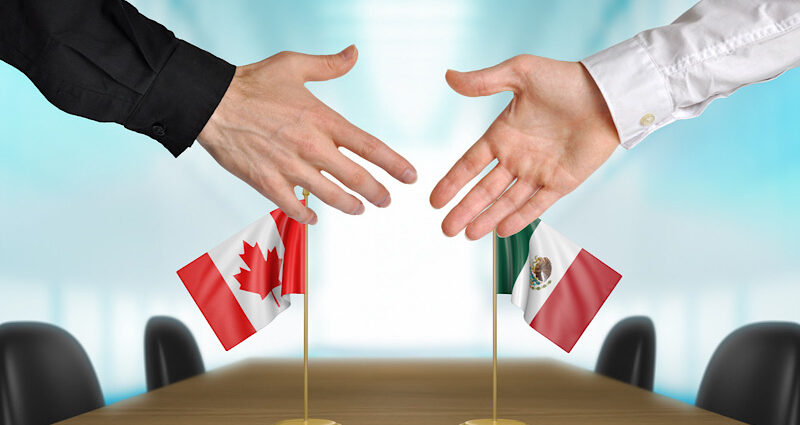
Building upon the historical parallels between Canadian and Mexican relations with Cuba, the federal government should partner with Mexico to expand its commitment towards essential humanitarian aid.
Both Canada and Mexico are hesitant to disturb the proverbial elephant in bed between them whose every “twitch and grunt” has an out-sized impact on both countries.
But providing aid to Cuba in its time of need could help redress past betrayals and serve as a strong foundation for improving Canadian-Mexican relations as both governments must confront the existential threat to the liberal world order posed by their largest shared trading partner.
The fact that Canada and Mexico were the only countries in the Western Hemisphere to defy the U.S. and refuse to cut ties with the country after the 1959 Cuban Revolution occupies a significant place in the national mythology of each country’s foreign policy.
Personal connections
Both Canada and Mexico have significant Cuban diasporas — with nearly 20,000 Cuban-born residents in Canada and more than 42,000 in Mexico, according to 2022 census data. These migrants have left lasting marks on both Canadian and Mexican cultures.
The personal ties between Canadian and Mexican citizens and Cubans have also been strengthened over generations by economic investment by both countries’ companies operating in the vacuum left by the U.S. and by the annual flow of tourists to the island.
Canadian vacationers, in fact, were the largest source of foreign exchange for the Cuban economy until Canadian airlines cancelled flights to the island in the face of the recent fuel shortages.
These shared connections, shaped by past foreign policy decisions, could now support greater co-operation on humanitarian aid.

Mexico’s leading role
In Mexico’s case, relations with Cuba were shaped by the revolutionary nationalism that followed its own revolution in 1910. Under the government of Adolfo López Mateos (1958–64), these ties were viewed through the lens of domestic politics and the Cold War, with the government appeasing domestic constituencies by firmly supporting Cuban sovereignty and the principle of non-intervention.
This led to Mexico spearheading the condemnation of the failed American Bay of Pigs invasion in 1961 at the United Nations, and refusing to break relations with the Cuba after the U.S. strong-armed other Latin American countries into ejecting Cuba from the Organization of American States (OAS) in 1964.
Canada’s objections to the Bay of Pigs invasion were more tepid, and it didn’t become a full member of the OAS until 1990. But nevertheless, the Canadian government also declined to toe the American line.
Prime Minister John Diefenbaker, in office from 1957 to 1963, saw that Canadians wanted the country to exhibit foreign policy independence from the U.S. Maintaining relations with Cuba became a feature of Canadian foreign policy supported by many citizens.
But even as the Canadian and Mexican governments publicly proclaimed friendship and constructive engagement with Cuba, subsequent historical investigations have shown both Canada and Mexico co-operated with successive American governments to provide intelligence on the Cuban regime.
This double dealing is well-known to historians, but it has barely registered for most Canadians and Mexicans, who continue to buy into the myths of their countries’ principled difference from the U.S.
Strengthen ties
But today, when popular opinion about the U.S. and its president in both Canada and Mexico are at historic lows, the Canadian and Mexican governments should work together to further strengthen their relations with Cuba.
Private citizens and organizations in both countries have held solidarity rallies and organized private aid missions. Expanding humanitarian aid for the Cuban people who are suffering the consequences of the U.S. government’s blockade would enable Canada and Mexico to fulfil the principled foreign policies many have assumed they’ve upheld since 1959.
Both Mexico and Canada are preoccupied by the upcoming renegotiation of the Canada-US-Mexico (CUSMA) trade agreements.
So far, Mexican President Claudia Sheinbaum has been more vocal in her support for the Cuban people. Canadian Prime Minister Mark Carney should take Sheinbaum up on her offer to allow foreign airplanes to refuel in Mexico, and should provide more than the $8 million in aid announced given Canada’s ties to Cuba.
Co-operating on providing aid to Cuba would build trust between the Mexican and Canadian governments at a time when both have sought to boost bilateral trade so that both countries are better able to withstand every twitch of their common neighbour.
Amelia M. Kiddle, Professor of History and Associate Dean, Research and Communities, University of Calgary
Subscribe to our newsletter.
This article is republished from The Conversation under a Creative Commons license. Read the original article.

