
And on reviving it in the United States
September 2, 2026
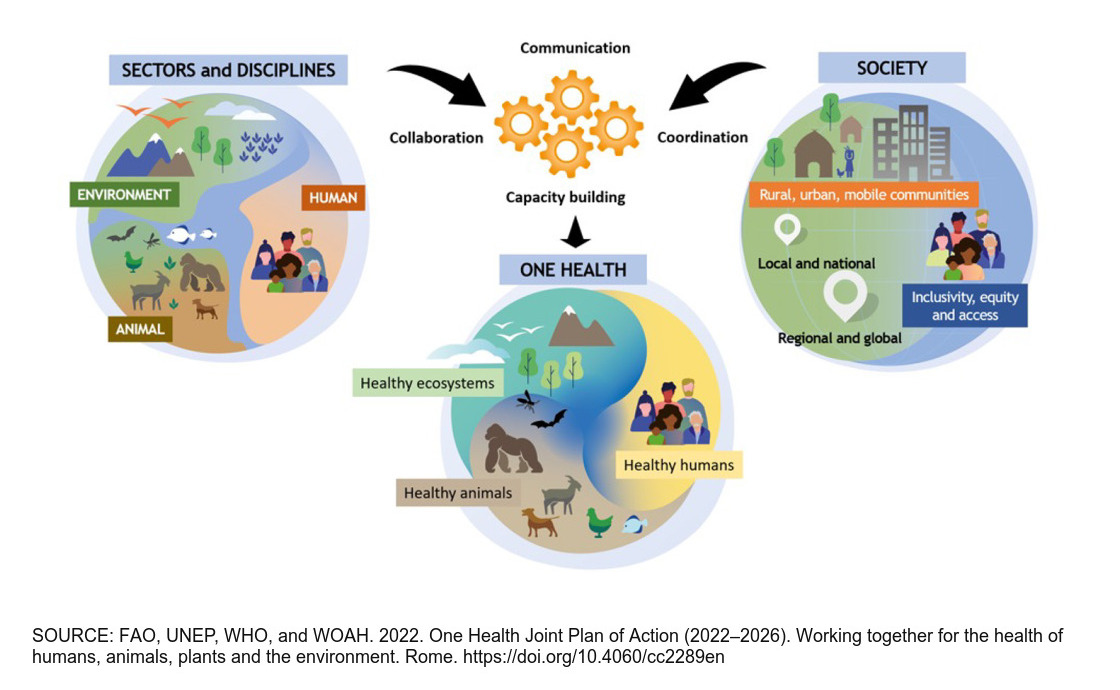
The international global health community has reached a consensus. Established global health institutions now recognize that human health cannot be safeguarded in isolation from the animal populations and surrounding ecosystems. The “One Health” paradigm is formally championed by the Quadripartite Alliance — comprising the World Health Organization (WHO), World Organization for Animal Health (WOAH), Food and Agriculture Organization (FAO), and United Nations Environment Programme (UNEP).
Together, these organizations endorse the One Health movement as a cornerstone of global stability.
As the high-level policy frameworks of the Quadripartite Alliance, the U.S. Centers for Disease Control and Prevention (CDC), and the European Environment Agency (EEA) advocate for a universal One Health approach, an urgent question emerges: Is the frontline workforce prepared to execute this vital integrated vision?
A milestone presentation at the 2025 American Veterinary Medical Association (AVMA) Convention was proposed by Dr. Lonnie J. King — a foundational architect of the modern One Health movement. Introduced by the American Veterinary One Health Society (AVOHS), Dr. King’s address — based upon his June 1, 2026 Journal of the AVMA article titled “Will veterinary medicine transform itself to meet today’s critical One Health challenges and remain relevant to societal needs and true to its oath?” — detailed a profound evolutionary mandate: veterinary medicine is entering its Fifth Transformation.
If the profession fails to fully embrace this broader societal calling, both its global relevance and our collective ability to mitigate catastrophic health threats will be critically diminished.
The Historical Continuum: Four Epochs of Adaptation
To appreciate the gravity of the current moment, Dr. King contextualized this shift within the historic evolution of veterinary medicine. The profession has never been static; it has systematically transformed across four major eras over the last three centuries to meet changing societal demands:
The First Transformation (Foundational Era)
Spanning from the Middle Ages to the late 18th century, this era was defined by military and transport utility. Horses were the primary engines of war and commerce; securing their health was paramount to national survival.

The Second Transformation (the Agricultural Crisis)
Emerging between 1750 and 1870, this period responded to catastrophic animal epidemics, such as rinderpest, which decimated millions of livestock and triggered widespread human famines. This societal crisis directly catalyzed scientific institutionalization, leading to the founding of the world’s first veterinary college in Lyon, France, in 1762.


The Third Transformation (Food Security and Trade)
From 1870 to 1970, as internal combustion engines replaced horses, the profession shifted toward enhancing food animal production, public health surveillance, and expanding global agricultural trade.

The Fourth Transformation (the Companion Animal Boom)
Beginning around 1970, rapid urbanization and an evolving appreciation for the human-animal bond ignited an explosion in companion animal medicine, corporate production systems, and highly specialized clinical practices.

The 21st century presents multi-dimensional challenges that the fourth transformation cannot solve alone. Anthropogenic pressures — accelerated population growth, rampant land-use changes, globalized trade, and severe biodiversity loss — have converged to create a hyper-volatile biological ecosystem.

The Genesis of the Fifth Transformation
Warning signs of this new era were codified over two decades ago. Trenchantly expressed, it pointed to the seminal 2003 National Academy of Medicine report, “Microbial Threats to Health,” which accurately predicted that the vast majority of emerging and reemerging infectious disease threats would be zoonotic (diseases transmitted from animals to humans) — originating in animals before spilling over into humans.
The modern veterinary medical professional no longer simply manages localized animal illness; they operate on the frontlines of global security. The contemporary portfolio of threats demands a cross-disciplinary approach, encompassing:
- Zoonotic spillover prevention: Intercepting pathogens at the wildlife-livestock-human interface before they mutate into catastrophic global pandemics.
- Antimicrobial Resistance (AMR): Mitigating the global threat of drug-resistant pathogens by regulating antibiotic deployment across agricultural landscapes.
- Ecological and climate safeguards: Protecting wildlife networks and managing environmental degradations that directly accelerate disease transmission vectors.

Reclaiming the Full Scope of the Veterinary Oath
A passionate argument was that this One Health Transformation is not an artificial expansion of the field; rather, it is the ultimate fulfillment of the Veterinary Oath. No other professional vow possesses a scope quite as expansive. Practitioners solemnly commit their scientific knowledge to the concurrent benefit of society, public health, conservation, and animal welfare.
This foundational responsibility was further elevated in 2019 when the World Veterinary Association introduced a model oath emphasizing ecosystem sustainability and environmental preservation as core veterinary duties. By contrast, domestic iterations, such as the U.S. Veterinary Oath, have gone a quarter-century without a comprehensive revision. In those twenty-five years, the world has faced multiple pandemics, severe climate milestones, and deep geopolitical shifts. The disconnect between historical training and modern ecological realities has created an unsustainable fragmentation within the field.

One Health 2.0: A Unified Call to Action
The historical roots of coordination are strong and enlightening. In 2007, a landmark agreement between the AVMA and the American Medical Association (AMA) — spearheaded by presidential leadership including veterinarian Dr. Roger Mahr (AVMA) and the late physician Dr. Ronald Davis (AMA) — successfully positioned One Health as an operational priority.
Yet, nearly two decades later, both the veterinary medical sector and its critical external partners have stalled short of a true systemic tipping point.
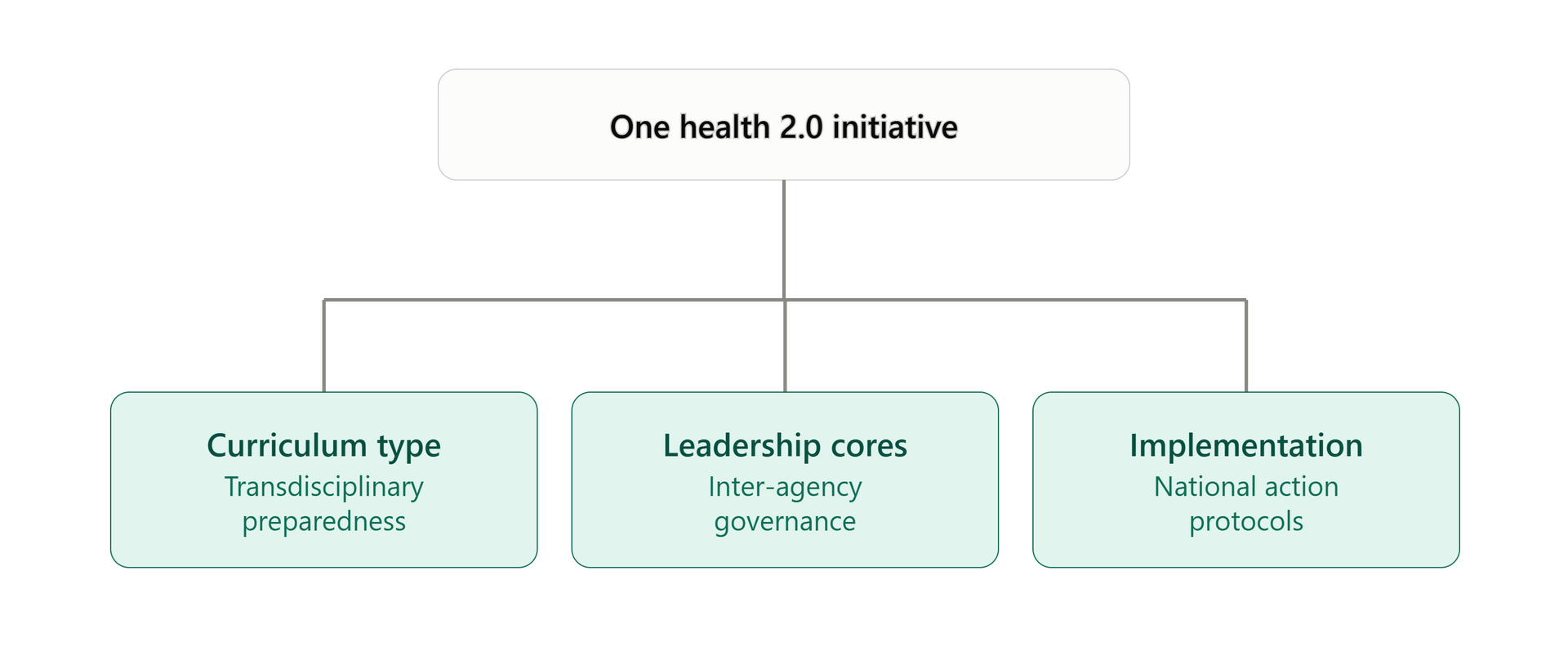
The solution requires an immediate transition to a coordinated “One Health 2.0 Initiative”. This evolution relies heavily on three core institutional transformations:
The future of good planetary health is not set in stone. It remains an open canvas for professionals, academics, and policymakers to intentionally design. Bending the trajectory of clinical training, public policy, and environmental management toward an integrated, cross-sector architecture fulfills our highest professional calling. Securing good human and animal health for tomorrow requires us to protect the entire living network today.
Subscribe to our newsletter.
This article was originally published on IMPAKTER. Read the original article.