

By David Boles, Local Journalism Initiative Reporter, St. Albert Gazette
June 23, 2026
A former minister in the British government says tone and messaging will play an important role in deciding the direction of the Alberta referendum campaign.
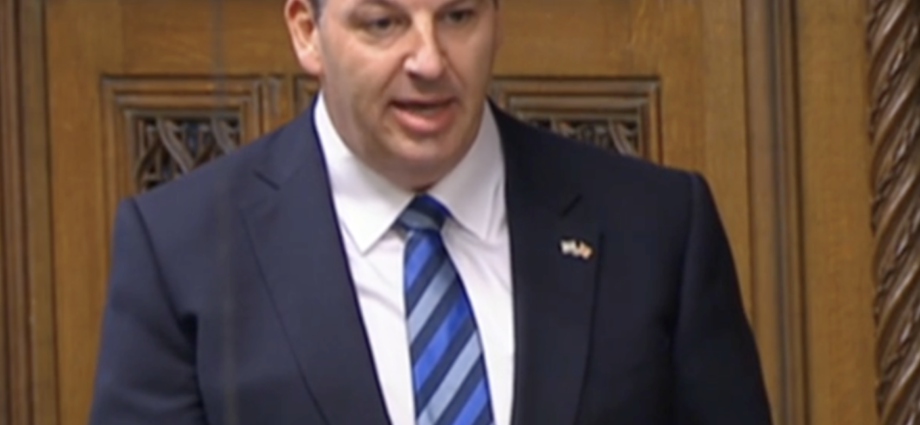
“Referenda are divisive tools,” Andrew Percy said. He likened the upcoming Alberta referendum to the 2016 Brexit vote that saw the United Kingdom withdraw from the European Union.
Percy, now a vice-president at Crestview Strategy, lives and works in Vancouver. But before that, he was a Conservative MP from northeast England for 14 years, first elected to Parliament in 2010, when David Cameron and the Tories swept back into office.
Right from the beginning, there were things Percy took note of.
“There had always been a division in all the political parties of the region, being divided on whether to join the EU,” said Percy. “But there had been a growing movement within the Conservative party that was increasingly Eurosceptic.”
That Euroscepticism led to the Brexit vote in 2016, which saw the Leave side narrowly emerge victorious, despite many believing the United Kingdom would never actually break up with the European Union. Representing a riding which overwhelmingly supported Britain leaving the EU, Percy said he took cues from his constituents and backed Brexit too.
But Percy noted Brexit wasn’t the only divisive issue the United Kingdom had to confront in the period leading up to the consequential vote.
“Everybody just assumed the Scottish independence referendum (in 2014) and Brexit might both get about 35 per cent on a good day, that’s what the polls seemed to suggest about a year or so out,” Percy said. “Then that got as far as 45 per cent by the time the referendum happened.”

One of the key things he took away from the Brexit and Scottish independence campaigns was how those on the Remain side conducted themselves.
“You had Remain campaigners who were almost patronizing to people for wanting to vote to separate from the EU, to separate from the UK,” Percy said.
He said voters were treated dismissively and insulted in some ways.
That brings us to Alberta.
The referendum question here voters will need to answer on Oct. 19 asks whether Alberta should remain in Canada, or if the provincial government should start down the road toward a legally binding referendum on Alberta independence.
Since that time, several groups have been formed advocating passionately for Alberta’s place within Canada, such as Vote To Stay. Other prominent individuals have made clear in their support for Alberta staying within Confederation, including Prime Minister Mark Carney, Premier Danielle Smith, and former deputy premier Thomas Lukaszuk.
In contrast, the Alberta Prosperity Project has enthusiastically supported Alberta’s independence, led by Jeffrey Rath and Mitch Sylvestre. The latter delivered a petition to Elections Alberta’s Edmonton office a few weeks ago with significant fanfare, complete with what he said was more than 300,000 signatures in support of Alberta’s departure from the Canadian federation.
That’s something Percy notes just can’t be written off.
“They just want to grow up in a Canada or an Alberta that reminds them of the place they grew up in as a child,” Percy said. “You can say that’s unrealistic and you can say that they’re wanting something that has passed and doesn’t exist anymore, that’s all fine. But just to dismiss those people that want that and to say to them, ‘Oh, they’re just bigots and racists,’ is really kind of insulting. You’ve already seen a bit of that.”
Percy says even in the conversations he’s having with others across Canada, he’s heard people being dismissive of the concerns of the pro-separation campaign.
That, Percy said, is the danger.
“It might go nowhere, it might be stupid, people can have their own view about that,” said Percy. “All I can say is those were exactly the same dismissals that were issued against Scottish independence, and especially against Brexit.”
Percy said the ship has likely sailed on a peaceful tone surrounding a debate on this issue. However, it doesn’t mean both sides can’t define their cornerstone arguments in a convincing way.
While it may be easier for the separatist side to lay out its case right now, Percy warned the pro-Canada side needs to be careful in its messaging, saying it would be wise for them to take cues from the Remain side in the Scottish independence vote.

The pro-United Kingdom effort emerged victorious in 2014, winning fairly easily with over 55 per cent of the vote by changing their messaging and adopting a softer tone.
Subscribe to our newsletter.
“You have to try and be positive,” Percy said. “The problem in the Brexit referendum is that the Remain side never did that. ‘Project Fear’, it was called. I suspect what will happen here is that the federalist side will just keep running ‘Project Fear’ stuff.”
