

By Kody Ferron, Local Journalism Initiative Reporter, Yellowknifer
May 21, 2026
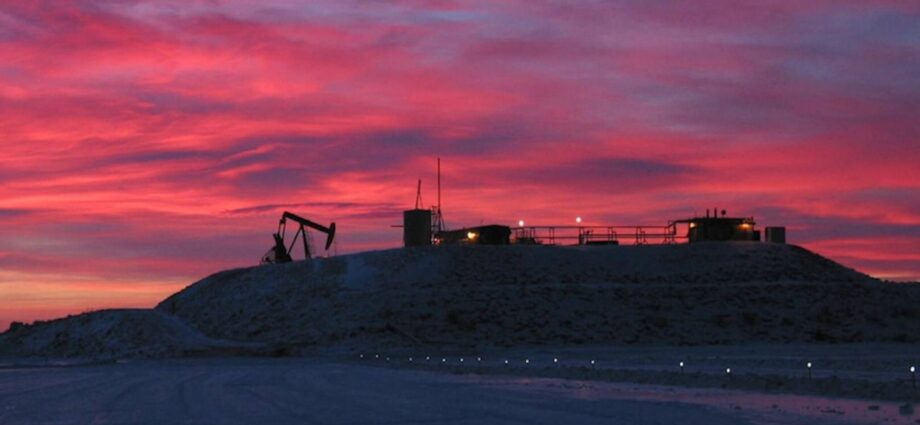
The environmental assessment for the closure of the Norman Wells oilfield aims to address the impacts of more than 100 years of oil extraction by Imperial Oil.
Canada Energy Regulator (CER) will continue regulating the site throughout its “abandonment process,” according to CER communications officer Melissa Marlyn.
“We will hold the company accountable to project commitments, conditions, regulations, codes and standards,” she said.
According to Marlyn, the Mackenzie Valley Review Board is conducting an environmental assessment, or EA, as part of the oilfield’s final closure and reclamation process.
Marlyn said CER is the designated regulatory agency for the reclamation process. As such, CER, along with “certain responsible ministers,” decides whether to adopt recommendations made in the EA, make alterations to the recommended changes or even to outright reject the EA.
In a Jan. 30 letter from Imperial Oil to CER, the oil company indicated that reclamation work is not expected to begin until after 2030, even though closure of the oilfield is targeted for the third quarter of this year. Reclamation will begin after the EA is complete and after CER and the Sahtu Land and Water Board provide permission to begin final closure.
Marlyn said that in order to reclaim its Norman Wells site, Imperial Oil requires certain authorizations from CER. A public proceeding will be held for these approvals, she added.
Imperial Oil has had the related financial securities in place since July 28, 1995 to help cover reclamation costs. This includes a financial security agreement, or promissory note, for $26 million and a continuing guarantee and undertaking in the amount of $75 million.

These securities were noted by Imperial Oil in its 2023 “application for variance of operations authorization” to CER. Marlyn said these funds are in accordance with the Canada Oil and Gas Operations Act.
Additionally, she said Imperial Oil made a security deposit in the form of a letter of credit for $180.9 million. This deposit was a condition of the company’s water licence and was made in accordance with the Mackenzie Valley Resource Management Act.
According to a document from the Mackenzie Valley Review Board, dated Feb. 10, Imperial’s 2016 Interim Closure and Reclamation Plan and its 2022 Interim Closure and Reclamation Plan Addendum do not provide adequate information required for the initial scope steps of an environmental assessment.
The review board is taking a two-part approach to address this lack of information.
Step one is to update Imperial’s Closure and Reclamation Plan so that it’s in line with the Mackenzie Valley Land and Water Board closure guidelines. Step two is for Imperial Oil to prepare and submit a project description to the review board.
After the review board analyzes Imperial Oil’s updated closure plan, the board will prescribe mitigation measures under the authority of the Mackenzie Valley Resource Management Act.
Subscribe to our newsletter.
Imperial Oil communications advisor Ruth Anne Beck said the company will remain responsible for its site throughout the closure process. The reclamation work is expected to last more than 20 years, and the process will provide long‑term employment opportunities for Indigenous and local businesses, Beck added.

