

Benjamin Selwyn, University of Sussex
May 19, 2026
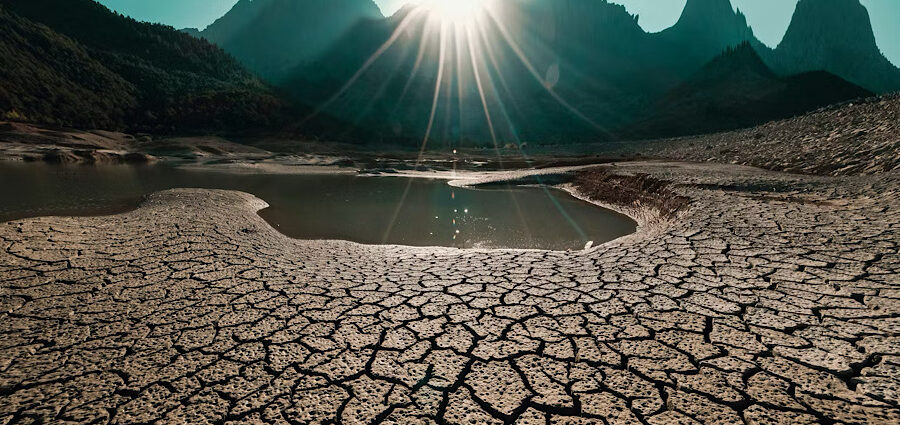
Extreme heat and drought could damage harvests and worsen global food insecurity this summer.
Climate scientists, agricultural experts and policymakers warn that a super El Niño could tip vulnerable populations towards famine. El Niño is a climate phenomenon in the Pacific that affects weather patterns globally. Rare “super” El Niños generate exceptionally intense warming of water at the surface of the Pacific, with temperatures rising more than 2°C above historical averages. This sharply disrupts global weather, increasing the risk of extreme heat, droughts and flooding.
Yet El Niño is only one pressure bearing down on an already dysfunctional and fragile global food system. Hunger is fundamentally political and economic.
Wars disrupt trade. Inequality limits access to food. Both are intensified by a profit‑driven food system that prioritises feeding animals for slaughter over feeding people. Millions of people are vulnerable even in normal times – and catastrophically so when shocks arrive.
El Niño alters rainfall, shifts jet streams and raises global temperatures.
Human‑induced global heating intensifies these dangers. A study by the UN’s Food and Agriculture Organization and the World Meteorological Organization shows that rising heat could make farm work unsafe for much of the year across South Asia, sub‑Saharan Africa and parts of the Americas. Crop yields have dropped sharply above 30°C, while heat stress reduces livestock productivity and survival.
Modern agriculture depends heavily on fossil‑fuel‑based fertilisers transported over long distances. If fertiliser fails to arrive in time for key planting windows, yields decline months later. In wealthy countries this translates into higher prices; in poorer ones, it translates into hunger.
Sub‑Saharan Africa is particularly exposed, importing around 80% of its fertiliser.
Yet the current Middle East war has revealed already existing fault-lines. Over recent decades, food production has been reorganised into long, energy‑intensive supply chains. These chains rely on cheap fossil fuels, synthetic fertilisers and monocultures designed to maximise output rather than resilience.

My research shows that such systems can simultaneously raise total food production while worsening food insecurity.

Nowhere is this clearer than in heavily indebted countries across the developing world. In parts of sub‑Saharan Africa, the Middle East and the Caribbean, governments are struggling with high food import bills alongside heavy debt repayments. This leaves little financial buffer to cushion households when prices spike.
Unsurprisingly, hunger is rising most rapidly where debt and food dependence intersect. Because of this, the humanitarian charity Oxfam is calling for G7 countries (including the UK, France and Germany) to redirect less than 3% of their military spending to vulnerable countries to reduce chronic hunger while easing debt pressures.
Deeper structural problems
Emergency finance is essential – but it is only a stop‑gap. Preventing future food crises requires structural change to how food is produced.
Livestock production is among the most fertiliser‑ and fossil‑fuel‑intensive forms of agriculture. It is responsible for about 14.5% of all human-induced greenhouse gas emissions.
A lot of farmland grows maize and soy to feed livestock rather than people. These “feed crops” require increasing fertilizers to maintain the same output. Studies on maize production in China find that exposure to temperatures above 28°C leads to sharp increases in fertiliser use. The feed-livestock complex therefore results in rising fossil‑fuel use – a pressure intensified by climate breakdown.
Meanwhile, global meat production is predicted to double between the early 2000s and 2050. When grazing land and feed cropland are combined, livestock production accounts for roughly 80% of global agricultural land.
Expanding this system increases land use, fertiliser demand, energy inputs and greenhouse gas emissions – exactly the opposite of what a climate‑stressed world requires.
Rather than simply reflecting consumer demand, state support enables the expansion of feed-livestock production. Of the approximately US$540 billion (£400 billion) annual subsidies to agriculture, the largest recipients are beef and milk producers. Many subsidies provide support to buy pesticides and fertilisers.
Imagine if such funds were redirected to food production for human need and planetary health?
A shift away from feed‑intensive livestock systems towards more plant‑based, agroecological farming would reduce pressure on land, while cutting demand for fertilisers and fossil fuels. Agroecology is a form of farming that works with ecological processes, emphasising crop diversity, nutrient cycling, healthy soils and locally adapted practices instead of heavy chemical inputs.
It is often claimed by large agribusiness companies (such as fertiliser and pesticide producers) that chemical‑intensive farming is around 20% more productive than agroecology. But this doesn’t take into account the environmental costs of damage to soil health or water pollution, for example.

Even where agroecology delivers slightly lower yields, reducing the production of crops to feed livestock frees up land. This allows agroecological farms to scale up and increase their food output. Studies show how diverse agroecological systems, including mixed crop-livestock farming, produce stronger food security and more nutritional food crops than industrial monoculture agriculture.
In parts of southern Malawi, farmers relied on monocropped maize supported by expensive fertiliser. Good years brought modest yields; bad years brought hunger. When farmers shifted to maize–legume intercropping – combining maize with pigeon pea, cowpea or groundnut – yields increased. Maize yields increased by about 800kg per hectare with less fertiliser, providing protein‑rich legumes and greater stability in dry years.
With state support, such approaches could be scaled to strengthen national food security.
Climate and geopolitical shocks – from El Niño, global heating or wars – hit a food system which already magnifies environmental and social vulnerabilities. Feed‑based livestock production worsens climate breakdown, diverts land and resources from feeding people, and deepens risk. Shifting to agroecological, plant‑centred food systems is essential, but requires sustained political action and public pressure.

New Balance Canada
Shop premium athletic footwear and apparel from New Balance Canada — while supporting The-14 through our affiliate link.
Visit StoreBenjamin Selwyn, Professor of International Relations and International Development, Department of International Relations, University of Sussex
Subscribe to our newsletter.
This article is republished from The Conversation under a Creative Commons license. Read the original article.

DHgate
Shop millions of products from China at attractive prices — while supporting The-14 through our affiliate link. Women’s Apparel, Electronics, Shoes, Accessories, B2B, and more.
Visit Store